

NGOC SON TEMPLE: THE SPIRITUAL HEART OF HOAN KIEM LAKE
- DATE
-
- January 2026
Located within the heart of Hanoi’s historic lakeside, Ngoc Son Temple stands as one of Vietnam’s most beloved cultural and spiritual landmarks. Revered by locals and travelers alike, this temple, often referred to as a Hoan Kiem Lake temple, offers rich layers of history, timeless architecture and symbolic meaning that reflect centuries of Vietnamese belief and identity.
1. Overview of Ngoc Son Temple (Jade Mountain Temple)
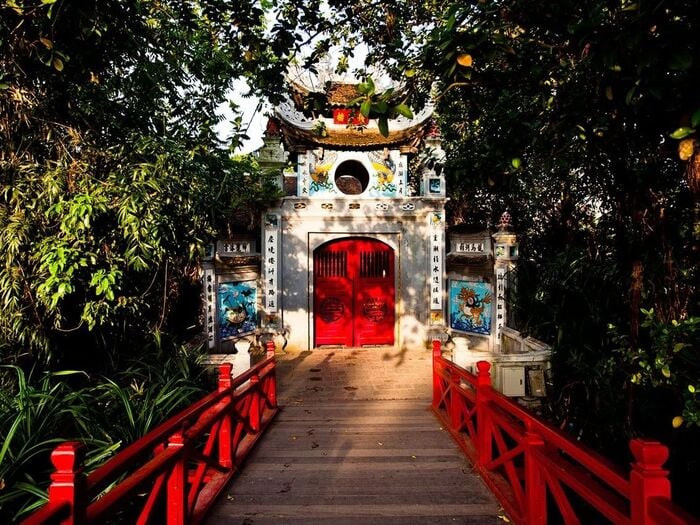
Sitting atop Jade Island in the center of Hoan Kiem Lake and Ngoc Son Temple, this gentle oasis of calm is a favorite destination for meditation, photography and cultural discovery. Easily recognizable by its scarlet wooden bridge and elegant pavilions, Ngoc Son Temple in Hanoi is more than a religious site; it is an immersive experience into the spiritual life of the city.
Source: Internet
The temple’s setting enhances its appeal: framed by reflective waters and centuries-old trees, the site provides a striking contrast to Hanoi’s urban energy. For visitors seeking not just sights but meaning, Ngoc Son Temple Vietnam offers a moment of contemplation steeped in tradition.
2. History and Origin of Ngoc Son Temple
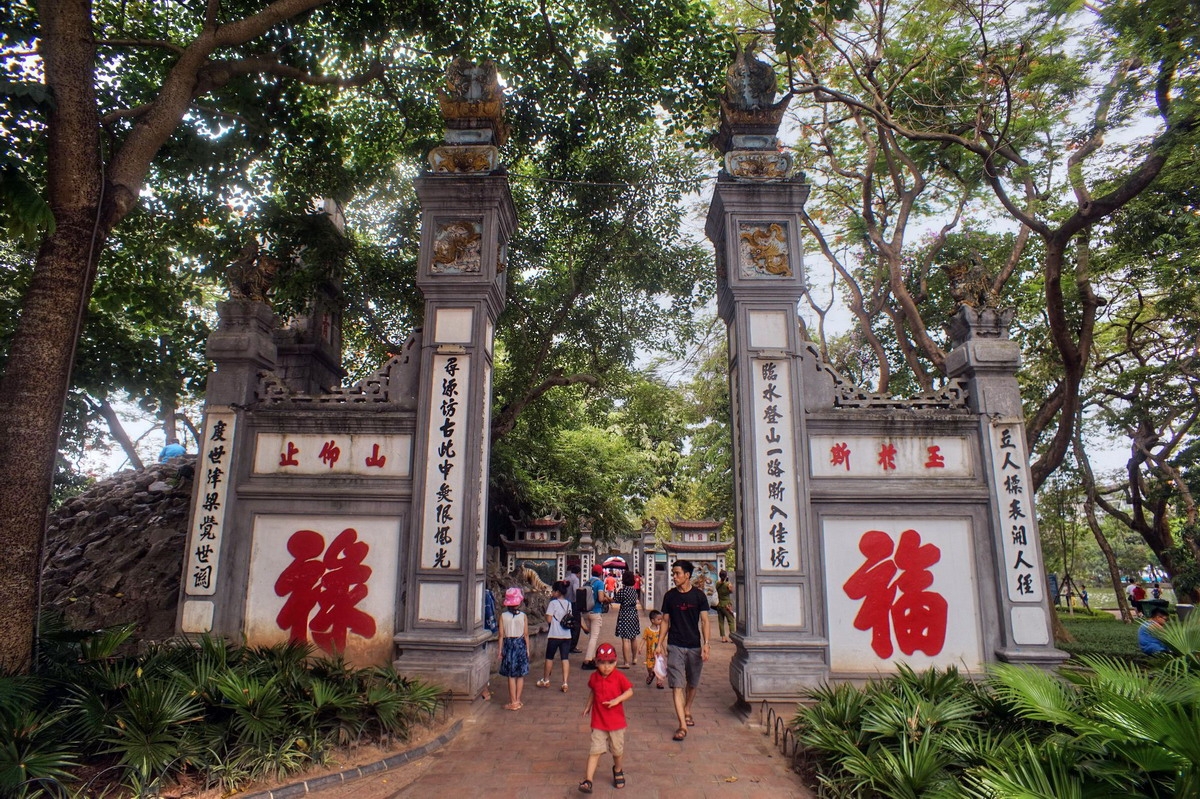
The story of Temple Ngoc Son begins in the 18th century under the reign of the Later Le Dynasty. Originally, the site functioned as a scenic pavilion where mandarins and literati would gather to appreciate nature and compose poetry. However, it eventually evolved into a sacred space deeply rooted in Vietnamese spiritual life.
Source: Internet
Ngoc Son Temple in Hanoi carries traces of multiple belief systems – Confucianism, Taoism and Buddhism – a testament to Vietnam’s syncretic religious culture. In the early 19th century, the temple was officially dedicated to three revered figures:
– Tran Hung Dao, the 13th-century military commander celebrated for his leadership in repelling Mongol invasions, symbolizing patriotic resilience.
– Van Xuong De Quan, a spirit honored for promoting learning and education.
– La To, a revered Taoist immortal associated with medicine and healing.
Over the years, the temple underwent numerous restorations, especially during the Nguyen era and later in the 20th century, to maintain its structure and spiritual significance. Today, it remains a living monument connecting the people of Hanoi with their history and heritage.
3. Symbolic Highlights of Ngoc Son Temple
Ngoc Son Temple’s architecture and layout are rich with symbolism. Beyond aesthetic beauty, each structure conveys philosophical meanings rooted in Vietnamese tradition.
3.1. The Pen Tower and the Ink Slab
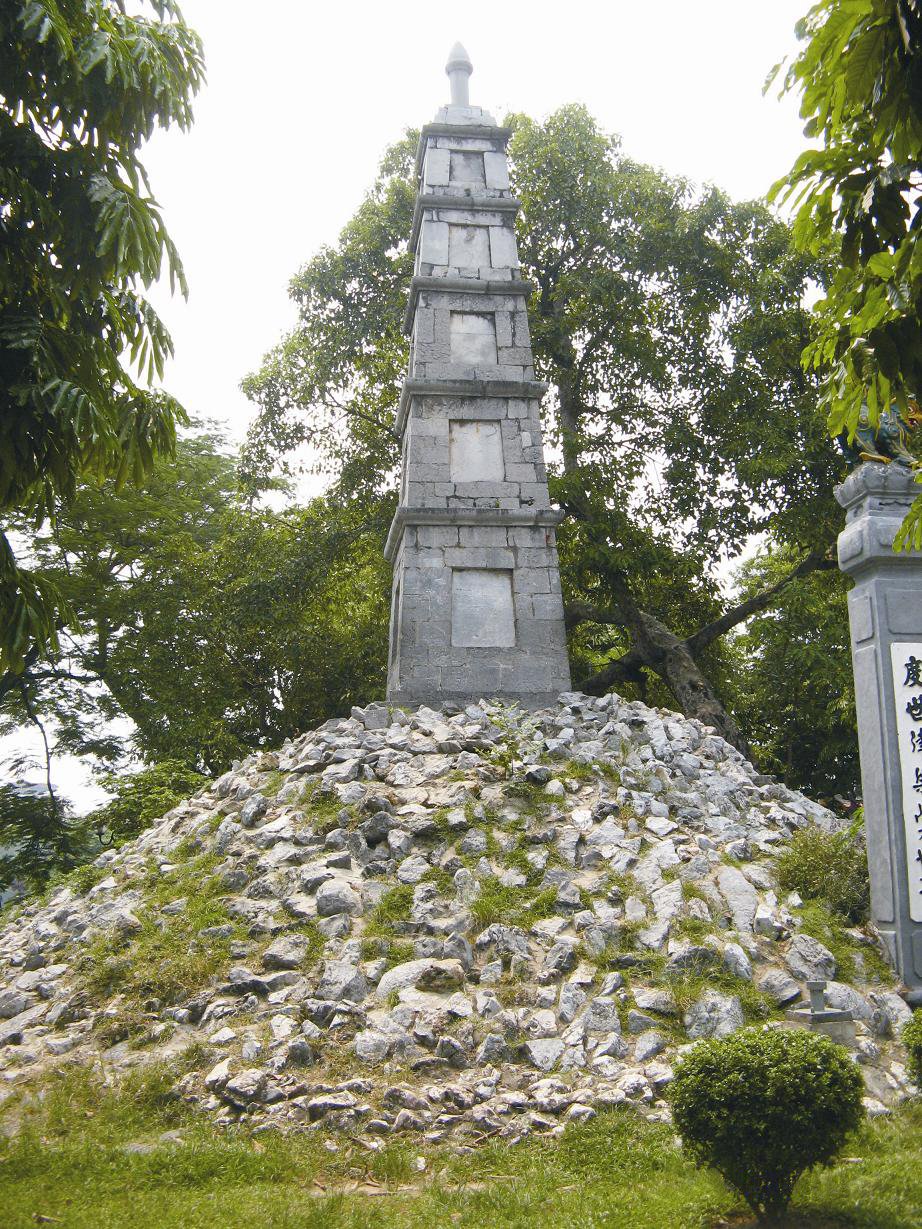
Just before entering the temple complex, visitors encounter two iconic artifacts:
The Pen Tower (Tháp Bút) resembles an upright calligraphy brush, symbolizing the power of education, wisdom and intellectual refinement.
Source: Internet
The Ink Slab (Đài Nghiên), carved in graceful form, represents the essence of written knowledge, a tribute to the importance of learning and scholarly pursuits.
Together, these two objects celebrate the cultural values of literacy and thoughtful reflection, reminding visitors that wisdom and moral integrity are central to Vietnamese identity.
3.2. The Huc Bridge, Dac Nguyet Lau and Tran Ba Dinh
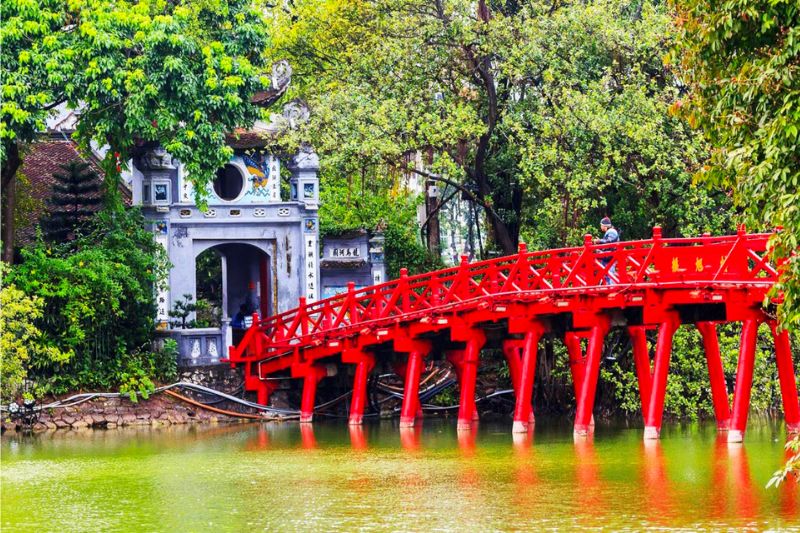
One of the most photographed elements is The Huc Bridge, a bright vermilion wooden span whose name translates to “Morning Sunlight Bridge.” As visitors step across its arched planks, they symbolically cross from the secular world into a sacred realm.
Source: Internet
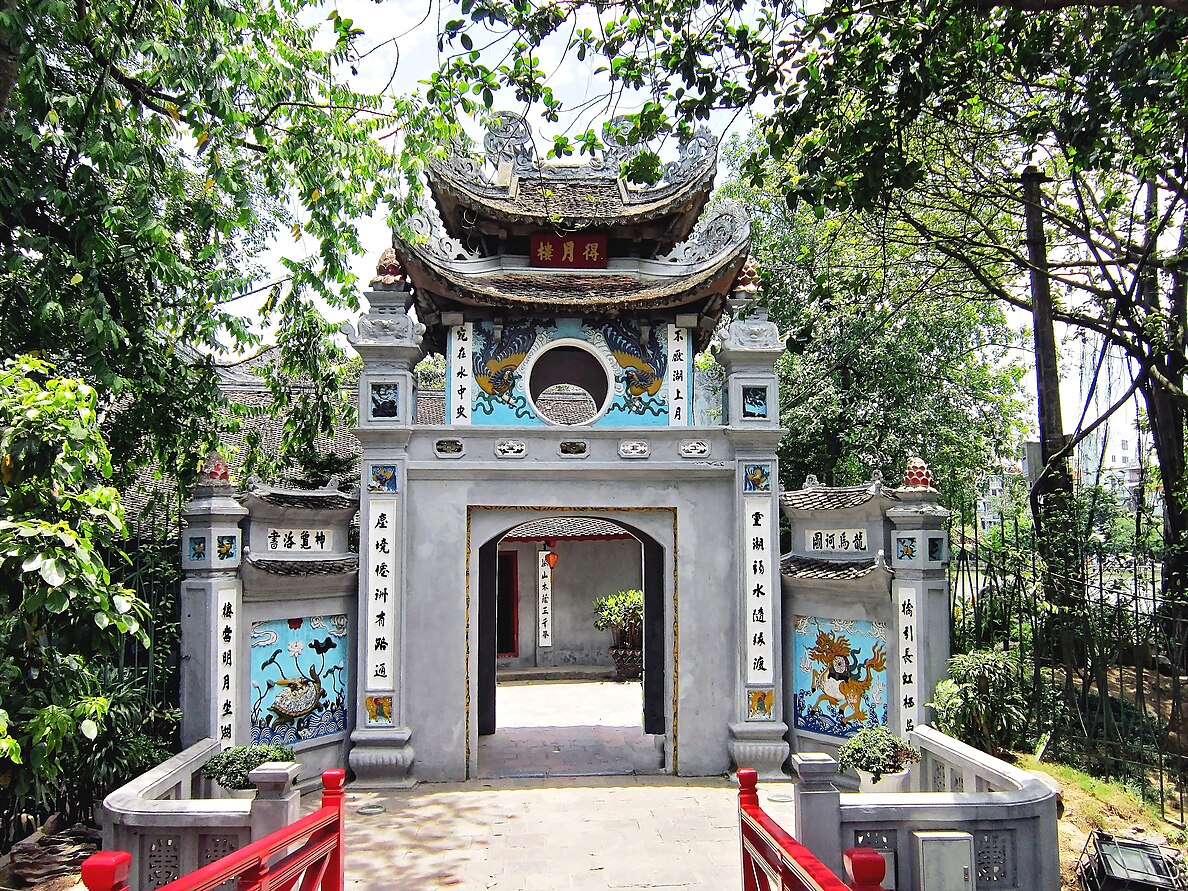
Beyond the bridge lies Đắc Nguyệt Lâu (Moon Watching Pavilion), an elegant structure offering serene lake views and a place for quiet contemplation. Its name reflects harmony between the earth and celestial cycles.
Source: Internet
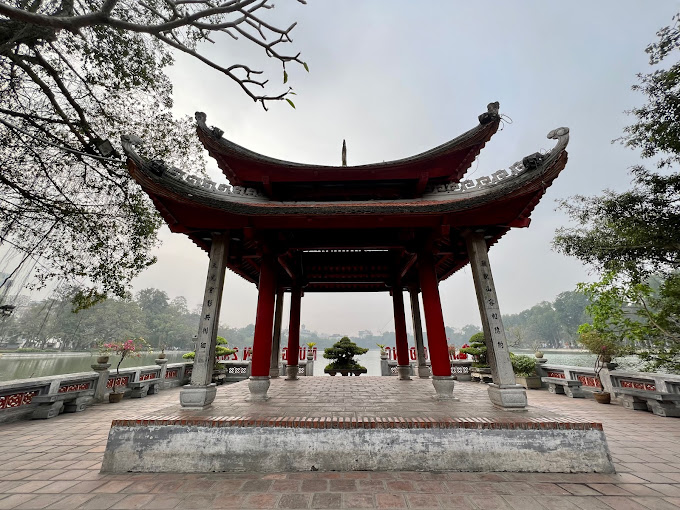
Nearby stands Tran Ba Dinh (Tran Pavilion), a structure believed to stabilize and channel positive energy from the lake toward the temple grounds. The pavilion’s location and design echo ancient Vietnamese cosmology, where water and architecture work in unison to create a spiritually auspicious space.
Source: Internet
3.3. Ngoc Son Temple
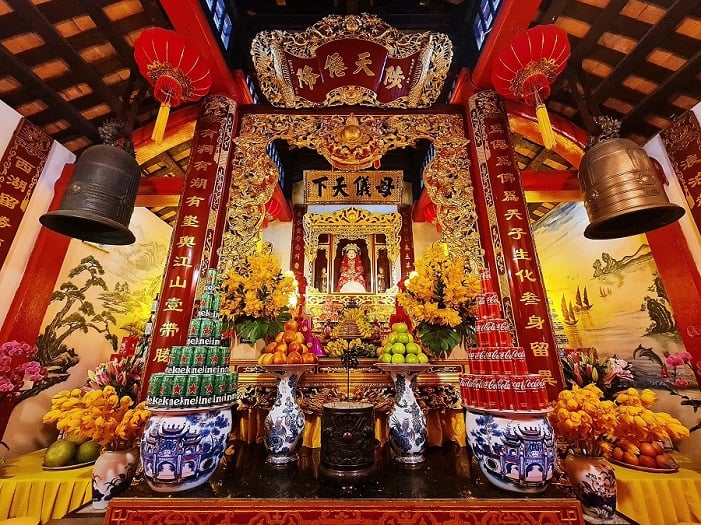
At the center of this complex is the temple proper, an architectural composition of wooden beams, tiled roofs and lacquered altars. The temple houses intricate altarpieces dedicated to the honored spirits, each adorned with offerings, incense and flowers.
Within the sanctuary, visitors may discover:
– Carved motifs of dragons and phoenixes, representing harmony and prosperity.
– Ceremonial artifacts, such as bells and censers, used in traditional rituals.
– Calligraphic panels, illustrating Confucian teachings about virtue and wisdom.
The interior exudes a gentle reverence: not austere but deeply rooted in a respect for life, nature and the values that bind a community together.
Source: Internet
4. Traveling Tips for Exploring Ngoc Son Temple
To make the most of your visit to this cherished site, consider the following tips:
– Best Time to Visit: Early morning or late afternoon offers softer light for Ngoc Son Temple photos and a more peaceful atmosphere. Midday can be crowded, especially on weekends.
– Opening Hours: Most visitors can explore the temple and bridge from early morning until early evening; check local signage or official sources for updated Ngoc Son Temple opening hours.
– Photography Guide: The area around Hoan Kiem Lake & Ngoc Son Temple provides stunning reflections and architectural lines, ideal for both landscape and portrait photography.
– Respect Cultural Norms: Dress modestly and maintain silence in indoor shrine spaces, especially during prayer times.
– Combine Nearby Attractions: A visit to Ngoc Son pairs naturally with a walk around Hoan Kiem Lake or a stroll through the adjacent Old Quarter.
5. Where to Stay: Hôtel du Parc Hanoï – A Perfect Hanoi Retreat
After exploring the beauty and spiritual depth of Hoan Kiem Lake temple and its surroundings, find comfort and elegance at Hôtel du Parc Hanoï. Centrally located, this refined hotel offers an ideal balance: within easy reach of major attractions, yet far enough from the city’s hustle to ensure restful nights.
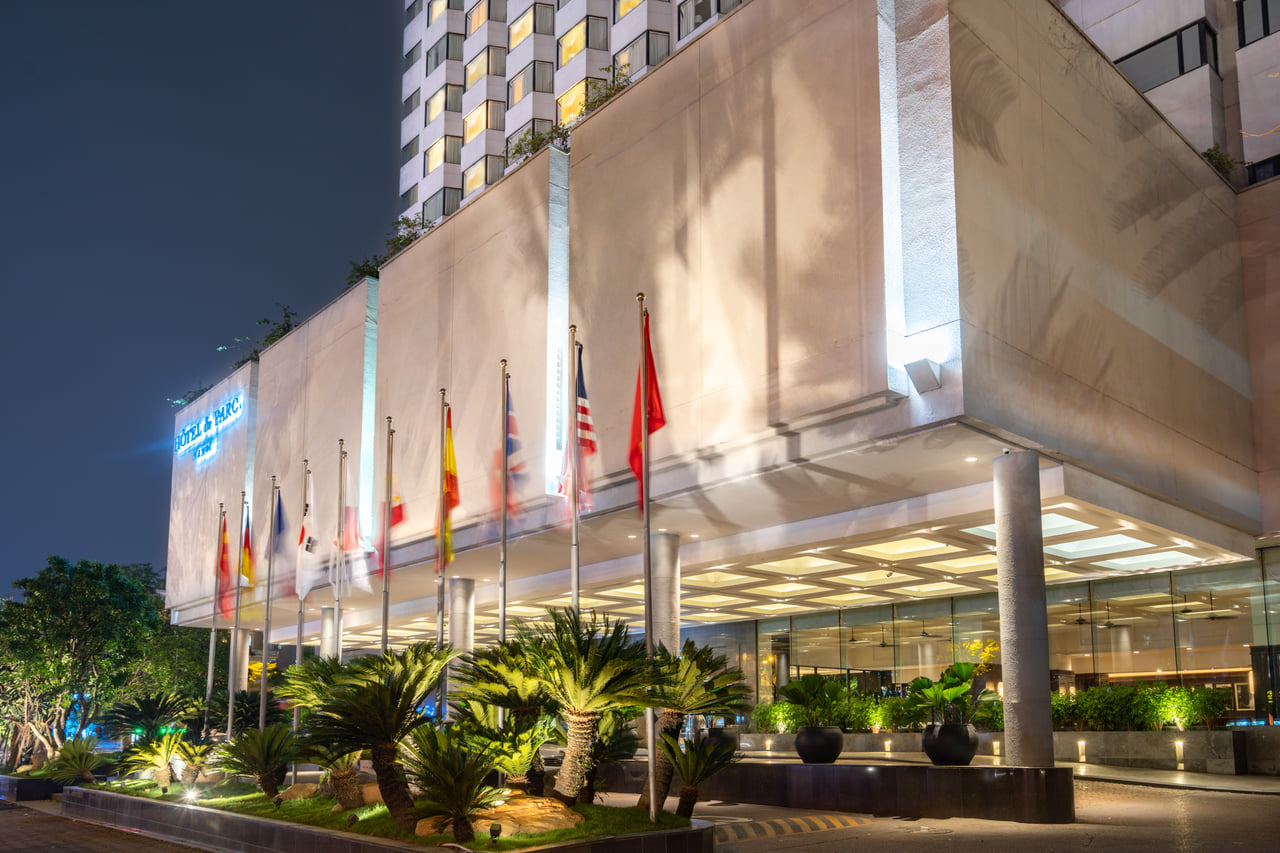
Hôtel du Parc Hanoï draws inspiration from Hanoi’s own history, reflected in its classic décor and timeless architectural details. Guests enjoy a full suite of modern amenities, including curated restaurants, a sophisticated bar, a swimming pool and an Executive Lounge – perfect for unwinding after a day of cultural exploration.
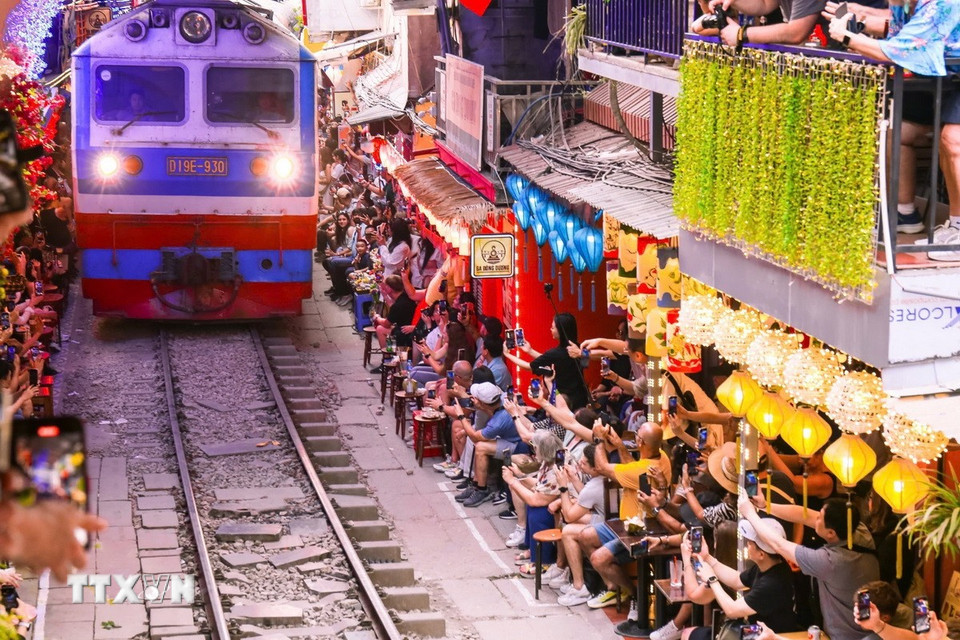
Moreover, the hotel’s proximity to Hanoi’s historic sites, such as the Opera House, Train Street, ancient pagodas and green parks, makes it a strategic choice for travelers seeking convenience without compromising tranquility.
Source: Internet
For more information, please visit: https://hotelduparchanoi.com/
From its rich historical roots to its symbolic architecture and serene setting, Ngoc Son Temple embodies the poetic soul of Hanoi. Whether you seek spiritual reflection, photographic beauty or cultural insight, a visit to this temple in Hoan Kiem Lake promises an unforgettable experience.
Pair your journey with a stay at Hôtel du Parc Hanoï and you’ll enjoy not only landmark explorations but also a sanctuary of comfort and refined heritage, a fitting complement to the timeless charm of Hanoi.
